


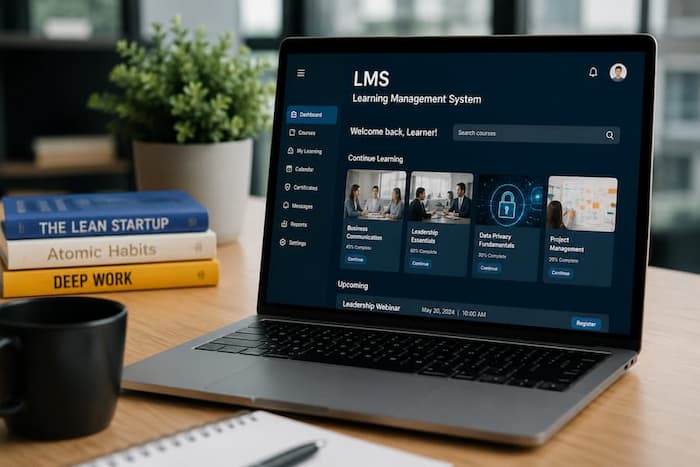
Learning today. Leading tomorrow.
Organizations invest heavily in technology, processes, and infrastructure.
Yet one factor consistently determines success:
People.
The ability to train, develop, and continuously upskill employees directly influences productivity, compliance, quality, and business outcomes.
As organizations scale, traditional approaches to learning become difficult to manage.
This is where Learning Management Systems (LMS) become essential.
Whether you are entering healthcare technology, pharmaceuticals, project management, product development, or enterprise systems implementation, understanding LMS platforms provides important foundational knowledge.
This guide explains what LMS is, how it works, implementation considerations, and lessons learned while leading such initiatives.
What is a Learning Management System (LMS)?
A Learning Management System is a software platform designed to create, manage, deliver, track, and report learning activities.
It acts as a centralized environment where organizations manage:
- Training courses
- Learning content
- Employee enrollments
- Assessments
- Certifications
- Compliance requirements
- Training records
Instead of managing learning manually through spreadsheets and emails, LMS creates a structured and scalable digital process.
Think of LMS as the operating system for organizational learning.
Why Organizations Need LMS Platforms
Modern organizations face increasing challenges:
- Rapid onboarding requirements
- Compliance obligations
- Distributed teams
- Skill gaps
- Continuous learning expectations
- Training documentation needs
Traditional methods often create:
- Inconsistent training records
- Administrative burden
- Limited visibility
- Delayed reporting
- Compliance risks
LMS platforms address these challenges through automation and centralization.
Key Features of a Modern Learning Management System
A successful LMS goes far beyond course hosting.
It becomes a connected learning ecosystem.
1. Course and Content Management
Supports:
- Training creation
- Digital modules
- Video content
- Documentation uploads
- Structured learning programs
2. User Enrollment and Access Management
Allows:
- Role-based enrollment
- Team assignments
- Organizational mapping
- Automated learning allocation
3. Assessments and Certifications
Supports:
- Quizzes
- Evaluations
- Competency checks
- Certification issuance
This helps organizations validate learning effectiveness.
4. Learning Paths
Modern LMS solutions enable organizations to create:
- Role-specific learning journeys
- Sequential learning programs
- Skill development pathways
5. Compliance and Qualification Tracking
Particularly important in regulated industries.
Supports:
- Mandatory training completion
- Expiry tracking
- Retraining schedules
- Qualification management
6. Analytics and Reporting
Provides visibility into:
- Completion rates
- Learning effectiveness
- User engagement
- Compliance metrics
- Workforce readiness indicators
My Experience: Leading LMS Product Development and Implementation
Learning platforms require balancing user experience, business needs, and compliance expectations.
As Senior Project Manager, my role extended across multiple areas:
Stakeholder Discovery Workshops
Collaborating with:
- Business teams
- Human resources
- Quality stakeholders
- Compliance teams
- Leadership groups
- Technology teams
The objective was understanding how training operated before translating needs into product functionality.
Translating Business Challenges into Requirements
Users often communicate operational pain points.
For example:
“Tracking employee training status takes too much effort.”
This becomes:
“Design automated dashboards with training completion and qualification visibility.”
Strong systems emerge from understanding business workflows rather than collecting feature requests.
Managing GxP and Validation Requirements
In regulated industries, LMS systems often support compliance activities.
Critical considerations included:
- Audit trails
- Electronic records
- Requirement traceability
- User access controls
- Qualification workflows
- Validation documentation
- Change management processes
Implementation required balancing usability with regulatory expectations.
Common Challenges During LMS Implementation
User adoption challenges
Employees often resist changes in learning methods.
Content standardization difficulties
Training materials may exist across multiple formats.
Integration complexity
LMS frequently requires connections with:
- HR systems
- Identity platforms
- Enterprise applications
- Compliance systems
Data migration requirements
Historical training records often require careful transition planning.
Advice for Beginners Entering Enterprise Learning Technology
Technology implementation begins with understanding users.
Before defining requirements ask:
- Who consumes training?
- Why does training matter?
- What risks exist if training is missed?
- How are learning outcomes measured?
- What business objectives are linked to training?
These questions often reveal requirements beyond software features.
Future of Learning Management Systems
LMS platforms continue evolving through:
- Artificial Intelligence-driven learning recommendations
- Personalized learning experiences
- Skills intelligence platforms
- Gamification models
- Mobile-first learning ecosystems
- Real-time analytics
- Adaptive learning technologies
Learning systems are shifting from content repositories toward intelligent workforce enablement platforms.
Final Thoughts
Learning Management Systems are more than training software.
They are strategic platforms that support workforce development, compliance readiness, and organizational capability building.
Leading these initiatives reinforced an important lesson:
Technology delivers platforms.
People create outcomes.
Successful LMS implementation happens when learning, compliance, and business objectives align.
Know the Author
Hey there, readers! Welcome to my little corner of the internet. I ain’t just your average blogger — I’m a seasoned project manager with a knack for diving deep into research and unraveling the mysteries of project management. But that’s not all there is to me! With a background in Healthcare, IT and Pharmaceuticals for Project management, hospital management and a passion for travel, hiking, and trekking, I’m all about blending the professional with the adventurous. So, join me on this voyage where we’ll explore the ins and outs of strategy, project management and share tales from the management, travels, and maybe even swap tips along the way.
Feel free to visit my site to know more about my researched output in the form of blogs: http://www.virsafeed.com/
Would you like to connect with me? Please drop me an email at virsafeed.com@gmail.com