

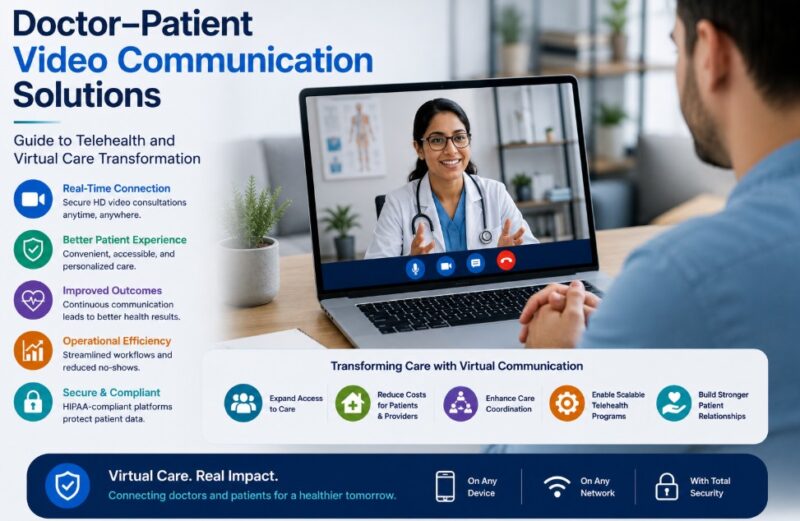
Doctor–Patient Video Communication
By a Senior Project Manager leading product development and implementation within healthcare and GxP-regulated environments
Healthcare is no longer limited by walls, buildings, or geography.
Technology has fundamentally changed how patients interact with providers.
Today, consultations, follow-ups, treatment discussions, and patient education can happen digitally through secure virtual environments.
This shift accelerated demand for Doctor–Patient Video Communication Solutions, often called telemedicine or virtual care platforms.
For professionals entering healthcare technology, digital health, healthcare operations, or project management, understanding virtual care systems provides important foundational knowledge.
This guide explains how Doctor–Patient Video Communication solutions work, why they matter, implementation considerations, and lessons learned from leading such initiatives.
What are Doctor–Patient Video Communication Solutions?
Doctor–Patient Video Communication Solutions are digital healthcare platforms that enable secure real-time interactions between clinicians and patients using video technologies.
These platforms support:
- Virtual consultations
- Follow-up visits
- Care coordination
- Remote patient engagement
- Communication workflows
- Clinical documentation support
- Scheduling and notifications
Instead of relying exclusively on physical appointments, these platforms extend care digitally.
Think of them as virtual care environments connecting providers and patients.
Why Virtual Healthcare Matters
Healthcare organizations increasingly face:
- Geographic access challenges
- Increasing patient demand
- Provider availability constraints
- Continuity-of-care requirements
- Rising patient expectations
Traditional care models often create:
- Travel burden
- Scheduling delays
- Accessibility limitations
- Missed appointments
- Operational inefficiencies
Virtual care platforms help address these challenges.
Core Components of Doctor–Patient Video Communication Platforms
1. Secure Video Consultation Capability
Supports:
- Real-time video sessions
- Audio communication
- Multi-participant consultations
Security and reliability remain essential.
2. Appointment and Scheduling Integration
Supports:
- Online booking
- Reminder notifications
- Session scheduling workflows
3. Patient Authentication and Access Management
Supports:
- Identity verification
- Role-based access
- Secure user workflows
4. Clinical Documentation Integration
Allows providers to:
- Capture consultation notes
- Review patient information
- Maintain continuity across visits
5. Prescription and Follow-Up Workflows
Supports:
- e-Prescriptions
- Follow-up recommendations
- Care communication activities
6. Analytics and Operational Dashboards
Provides visibility into:
- Consultation activity
- Utilization trends
- Workflow performance
- Patient engagement metrics
My Experience: Leading Virtual Care Product Development and Implementation
Telehealth implementation requires balancing patient experience, clinical workflows, technology performance, and compliance expectations.
As Senior Project Manager, my responsibilities included:
Stakeholder Discovery Workshops
Collaborating with:
- Physicians
- Healthcare operations teams
- Patient support groups
- Quality stakeholders
- Business users
- Technical teams
The objective was understanding care delivery realities before defining system functionality.
Translating Human and Clinical Challenges into Product Requirements
Users often describe operational pain points.
For example:
“Patients frequently miss in-person follow-up consultations.”
This becomes:
“Develop virtual follow-up workflows with reminders and integrated scheduling capabilities.”
Strong products emerge from understanding human experiences.
Managing GxP and Compliance Requirements
Healthcare communication platforms require strong governance.
Key focus areas included:
- Requirement traceability
- Audit trails
- Role-based access management
- Data privacy considerations
- Validation activities
- Change management processes
- Data integrity expectations
Implementation success required balancing usability with compliance requirements.
Common Challenges During Telehealth Implementation
Connectivity variability
Users often have different technology environments.
User adoption requirements
Patients and providers may require onboarding support.
Workflow integration complexity
Video platforms frequently integrate with:
- EMR systems
- scheduling systems
- prescription systems
- communication platforms
Privacy and security expectations
Healthcare communication requires robust controls.
Advice for Beginners Entering Digital Health Projects
Before gathering requirements ask:
- How does care happen today?
- Which interactions can be virtual?
- What frustrates patients?
- Which workflows affect continuity?
- What information is essential before consultation begins?
Understanding care journeys consistently creates stronger solutions.
Future of Doctor–Patient Video Communication Platforms
Virtual care ecosystems continue evolving through:
- Artificial Intelligence-assisted clinical support
- Real-time transcription capabilities
- Remote patient monitoring integration
- Connected wearable ecosystems
- Predictive care engagement
- Intelligent virtual assistants
- Personalized digital healthcare journeys
Healthcare is evolving from location-based care toward connected care ecosystems.
Final Thoughts
Doctor–Patient Video Communication Solutions are more than video platforms.
They are healthcare transformation systems enabling accessibility, continuity, and patient-centered experiences.
Leading these initiatives reinforced a recurring lesson:
Technology connects people.
Understanding care journeys creates impact.
Successful implementation happens when users, workflows, compliance, and technology align.
Hey there, readers! Welcome to my little corner of the internet. I ain’t just your average blogger — I’m a seasoned project manager with a knack for diving deep into research and unraveling the mysteries of project management. But that’s not all there is to me! With a background in Healthcare, IT and Pharmaceuticals for Project management, hospital management and a passion for travel, hiking, and trekking, I’m all about blending the professional with the adventurous. So, join me on this voyage where we’ll explore the ins and outs of strategy, project management and share tales from the management, travels, and maybe even swap tips along the way.
Feel free to visit my site to know more about my researched output in the form of blogs: http://www.virsafeed.com/
Would you like to connect with me? Please drop me an email at virsafeed.com@gmail.com