

Design beats effort
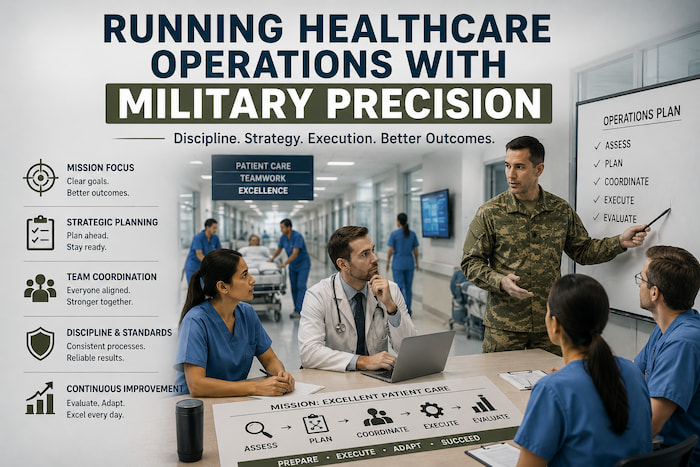
Precision is a word that gets misused in healthcare. People reach for it when they mean tidiness, or strictness, or a fuller spreadsheet. Real operational precision is narrower and more demanding than any of those. It means the right resource arrives at the right place at the right time, reliably, and that you know it will before it happens. After forty years of running operations and watching military units do the same under far harsher conditions, I have come to believe precision is mostly a matter of design, not effort. Tired people working harder will never out-perform a well-designed system running calmly.
Precision Begins With a Single Source of Truth
A unit going into the field operates from one common picture of where everyone and everything is. Hospitals frequently operate from several competing pictures at once. The bed manager believes one thing, the ward whiteboard says another, the electronic record says a third, and the discharge lounge has heard nothing from anyone. Precision is impossible when the map disagrees with itself. The first move toward a precise operation is brutally unglamorous: agree on one trusted view of capacity, demand, and flow, and make every decision from it. Everything else is decoration until that exists.
Rehearse the Routine, Not Just the Crisis
Militaries rehearse ordinary movements until they are dull, because the dull competence is what holds when the situation turns. Hospitals tend to rehearse only the dramatic events, the major incident exercise once a year, while the daily ward round, the morning bed meeting, and the weekend handover are left to chance. The events that actually erode performance are not the rare disasters. They are the thousand small frictions in the routine. Precision is won by tightening the everyday: a bed meeting that starts on time, follows the same structure, ends with named owners and deadlines, and is held to those owners the next morning.
Measure Flow, Not Just Activity
Activity tells you how busy people were. Flow tells you whether the patient moved. These are different, and confusing them is one of the most common operational errors I have seen. A department can be frantically busy and still have patients stuck for hours, because the work and the movement have come apart. A precise operation watches the patient’s journey end to end and asks where it stalls, rather than congratulating each silo for being fully occupied. Track time-to-decision, time-to-bed, and time-to-discharge, and you will find the true constraints hiding behind impressively high utilisation figures.
Precision Is a Daily Habit
The hardest part is that precision does not stay won. It decays the moment attention drifts. Military units sustain it through relentless routine and clear ownership, and the same is required in a hospital. Pick the few measures that matter, review them at the same time every day, give every gap a named owner, and close the loop the following day. Do that consistently and precision stops being a slogan on a poster and becomes simply how the place runs.
Hey there, readers! Welcome to my little corner of the internet. I ain’t just your average blogger — I’m a seasoned project manager with a knack for diving deep into research and unraveling the mysteries of project management. But that’s not all there is to me! With a background in Healthcare, IT and Pharmaceuticals for Project management, hospital management and a passion for travel, hiking, and trekking, I’m all about blending the professional with the adventurous. So, join me on this voyage where we’ll explore the ins and outs of strategy, project management and share tales from the management, travels, and maybe even swap tips along the way.
Feel free to visit my site to know more about my researched output in the form of blogs: http://www.virsafeed.com/
Would you like to connect with me? Please drop me an email at virsafeed.com@gmail.com