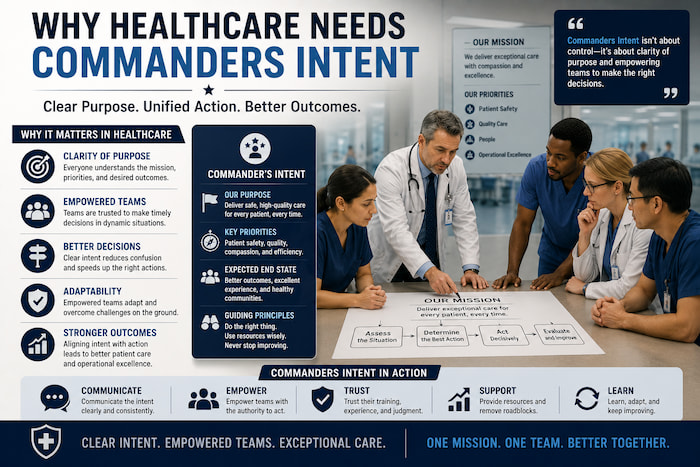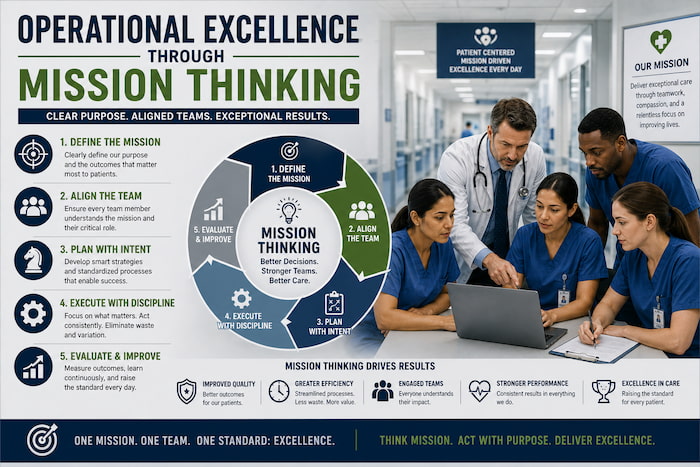


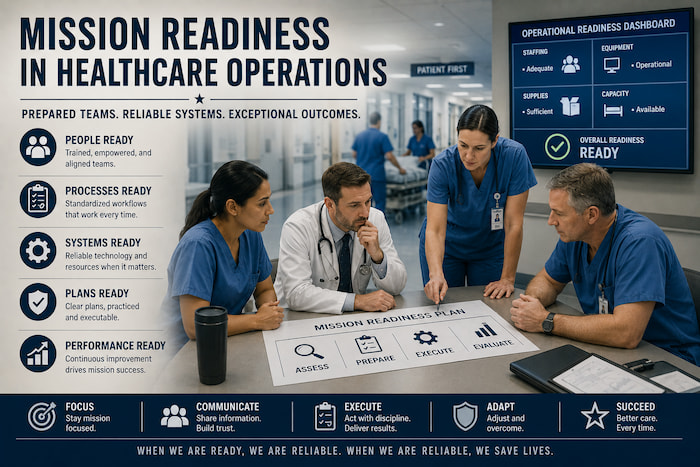
Ready before you need it.
Readiness is the quietest discipline in any operation, and the easiest to neglect, because its whole purpose is to pay off on a day that has not arrived yet. In the military, readiness is sacred. A unit is assessed not only on what it did last week but on whether it could deploy and perform tonight if ordered. Healthcare talks about preparedness, usually after something has already gone wrong, but rarely builds it into the rhythm of normal operations. Forty years in, I am convinced that the gap between good and great hospitals is mostly a gap in readiness.
Readiness Is Measured Before You Need It
The mistake hospitals make is treating readiness as a response rather than a state. The military asks a different question. Not what will we do when surge hits, but are we ready right now, and how do we know. Readiness means the surge plan is current rather than two reorganisations out of date, the staff named in it still work here, the equipment listed in it actually exists and functions, and the people expected to act have rehearsed their part. A plan in a binder that nobody has opened in a year is not readiness. It is paperwork that provides comfort and nothing else.
The Three Questions of Readiness
Any unit can assess its readiness with three honest questions, and so can any hospital department. First, do we have the people, with the right skills, available and not already exhausted by the routine load. Second, do we have the materiel, the beds, equipment, drugs, and supplies, in the right quantity and the right place. Third, do the people know the plan well enough to execute it without reading it. A weakness in any one of the three breaks the whole. A fully stocked ward with no trained staff is not ready. A skilled team with no equipment is not ready. The honesty of the answers matters more than their comfort.
Rehearsal Turns Plans Into Reflexes
Readiness is built through rehearsal, and rehearsal is where most healthcare preparedness quietly fails. It is uncomfortable to pull a team off the floor to walk through a scenario when the floor is already full. But the military rehearses precisely because the real event is the worst possible moment to discover that the plan does not survive contact. A short, regular, realistic drill, the mass-casualty walk-through, the IT-down exercise, the evacuation rehearsal, converts a written plan into a shared reflex. When the real thing comes, ready teams do not rise to the occasion. They fall back on their training, which is exactly what you want.
Readiness Protects the People, Too
There is a human argument for readiness that often gets lost in the operational one. Teams that are ready are less frightened. They have rehearsed the bad day, so when it arrives they feel competent rather than overwhelmed, and competence is the strongest protection against the burnout and moral injury that hollow out healthcare workforces. Investing in readiness is not only about protecting patients on the worst day. It is about protecting the people who will have to face it.
Hey there, readers! Welcome to my little corner of the internet. I ain’t just your average blogger — I’m a seasoned project manager with a knack for diving deep into research and unraveling the mysteries of project management. But that’s not all there is to me! With a background in Healthcare, IT and Pharmaceuticals for Project management, hospital management and a passion for travel, hiking, and trekking, I’m all about blending the professional with the adventurous. So, join me on this voyage where we’ll explore the ins and outs of strategy, project management and share tales from the management, travels, and maybe even swap tips along the way.
Feel free to visit my site to know more about my researched output in the form of blogs: http://www.virsafeed.com/
Would you like to connect with me? Please drop me an email at virsafeed.com@gmail.com