


Leading Teams Through Complexity and Change
“A warrior is not someone who never feels fear. A warrior is someone who has learned to act well while feeling it.”
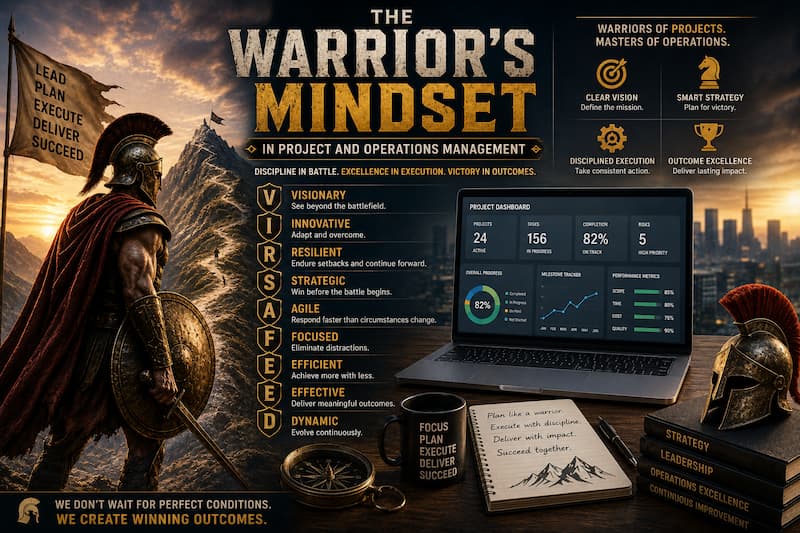
The word warrior gets misused in business writing. It usually arrives wrapped in noise, aggression, conquest, crushing the competition, the language of people who have never actually been anywhere dangerous. The warriors worth learning from were almost never like that. The ones I have studied and admired were calm, prepared, disciplined, and deeply protective of the people they led. They were at their quietest when the situation was at its loudest. That is the mindset I want to talk about, because complex projects need it far more than they need another framework.
Modern project management is drowning in tools and starving for temperament. We have certifications, methodologies, dashboards, and an endless supply of process. What we lack, when a project genuinely descends into complexity and the plan stops working, is the inner steadiness to lead people through the fog without losing them or ourselves. That steadiness is what I mean by the warrior’s mindset, and it is learnable.
Why Complexity Breaks Ordinary Project Management
A complicated project can be planned. A complex one cannot, at least not in the way we wish. Complicated problems have knowable solutions if you are thorough enough. Complex ones shift as you touch them, the variables interact, the requirements move, the people surprise you, and the plan you built with such care starts diverging from reality within days. Most project management training prepares people beautifully for complication and abandons them at complexity.
This is exactly the terrain a warrior is trained for. Not the set-piece battle that goes to plan, but the chaos after the plan dissolves, when information is incomplete, the situation is changing, and someone still has to decide and act. The warrior’s mindset is not about having a better plan. It is about being the kind of leader who functions when the plan is gone.
The Five Disciplines of the Warrior Project Leader
Over the years I have come to think of this mindset as five disciplines. None of them are soft, and all of them can be practised.
1. Clarity Under Pressure
When a project is in crisis, the first casualty is clear thinking. Information floods in, stakeholders panic, and the temptation is to react to everything at once. The warrior’s first discipline is to slow the mind down precisely when events are speeding up. Name the two or three things that actually matter right now, and let the noise wait. A leader who can find the signal in the chaos gives an anxious team something solid to stand on. Clarity, in a crisis, is the most generous thing you can offer the people who depend on you.
2. Decisiveness With Incomplete Information
Warriors rarely get the luxury of complete information, and neither do project leaders in complex work. Waiting for certainty is itself a decision, usually the worst one available, because the situation keeps deteriorating while you wait. The discipline is to make the best decision the available information supports, commit to it clearly, and stay alert enough to adjust as the picture sharpens. A clear decision you can correct beats a perfect decision that arrives too late. Indecision, dressed up as prudence, has sunk more projects than bad calls ever did.
3. Protecting the Team
The warrior leader stands between the team and the chaos, not behind it. When the pressure comes down from above, the project leader’s job is to absorb what they can and shield the team from the rest, so the people doing the work can keep their focus. This is not about being a hero. It is about understanding that a team drowning in executive panic and shifting demands cannot deliver. The leader who filters the chaos, takes the difficult conversations themselves, and gives their people a stable space to work in is doing the most important part of the job, the part no methodology lists.
4. Adaptability Without Losing the Objective
The hardest balance in complex work is staying flexible on method while staying fixed on purpose. A warrior adapts tactics constantly but never forgets the objective. Project leaders often get this exactly backwards, clinging rigidly to the plan while losing sight of why the plan existed. The discipline is to hold the goal sacred and treat everything else, the approach, the sequence, the original assumptions, as provisional. When you know precisely what you are trying to achieve, you can throw away half your plan without panic, because you can always find another route to a goal you still clearly see.
5. Endurance and Recovery
Complex projects are not sprints, and the warrior’s mindset includes knowing that a depleted leader is a dangerous one. Sustained pressure degrades judgment, and the leader running on empty makes the very errors the team can least afford. Real toughness is not the refusal to rest. It is the discipline to manage your own energy and your team’s so that you are still thinking clearly in month six, not just month one. The warrior plans for the long campaign, forces the recovery, and treats endurance as something to be engineered rather than hoped for.
Leading Through Change, Not Just Managing It
Change management as a discipline tends to treat people as obstacles to be moved through a curve. The warrior’s mindset treats them as the entire point. People resist change not because they are difficult but because change threatens something they value, their competence, their security, their sense of control. A warrior leader does not bulldoze that resistance. They understand it, address the real fear underneath it, and bring people with them rather than dragging them.
The most powerful tool here is the one warriors have always used: telling people the truth about the situation and trusting them to rise to it. Teams can handle a hard reality stated honestly. What they cannot handle is the sense that they are being managed, spun, or kept in the dark. When you tell people clearly what is changing, why it is changing, and what you need from them, you treat them as adults capable of meeting a challenge, and most of the time, they do.
The Warrior’s Mindset Is Quiet
If there is one thing I want to correct about the warrior idea, it is the noise. The genuine version of this mindset is quiet. It does not shout, dominate, or perform toughness. It shows up as the project leader who stays calm when the room is rattled, decides when others freeze, protects the team when the pressure comes, adapts without losing the thread, and is still standing, clear-headed, when the long project finally turns the corner.
Complexity and change are not problems to be eliminated from modern work. They are the permanent conditions of it. The frameworks will keep coming and going, but the temperament that lets a leader guide real people through real uncertainty does not go out of date. That, in the end, is what the warrior’s mindset offers project management: not a new method, but the old, hard-won steadiness to lead when the method runs out.
“Hold the objective sacred and everything else loosely. That is how you throw away half your plan without losing your nerve.”
Hey there, readers! Welcome to my little corner of the internet. I ain’t just your average blogger — I’m a seasoned project manager with a knack for diving deep into research and unraveling the mysteries of project management. But that’s not all there is to me! With a background in Healthcare, IT and Pharmaceuticals for Project management, hospital management and a passion for travel, hiking, and trekking, I’m all about blending the professional with the adventurous. So, join me on this voyage where we’ll explore the ins and outs of strategy, project management and share tales from the management, travels, and maybe even swap tips along the way.
Feel free to visit my site to know more about my researched output in the form of blogs: http://www.virsafeed.com/
Would you like to connect with me? Please drop me an email at virsafeed.com@gmail.com