

Built to Lead. Trained to Deliver.
In today’s fast-paced project management landscape, success goes beyond deadlines and budgets—it’s about delivering impactful outcomes aligned with organizational goals. To navigate challenges and lead effectively, project managers need a guiding framework.
In many organizations, managers and leaders often fall into the trap of relying solely on theoretical frameworks and textbook methodologies to navigate challenges. While these structured approaches provide a foundation, they can lead to a narrow perspective that overlooks the dynamic, real-time complexities of projects and teams. By treating failures as inevitable trends rather than opportunities for growth and adaptation, organizations risk perpetuating a cycle of underperformance. This rigid adherence to written guidelines often stifles innovation, discourages creative problem-solving, and fails to address the unique, evolving needs of teams and projects. As a result, projects suffer, morale declines, and the organization misses out on the chance to learn from failures and build resilience. To truly succeed, leaders must balance theoretical knowledge with real-time insights, fostering a culture that embraces adaptability, continuous learning, and proactive problem-solving to turn potential failures into stepping stones for long-term success.
The Hack: “Agile on Paper, Chaos in Practice”
A growing trend in project management is the blind adherence to rigid, bookish methodologies—often disguised as “Agile” or “structured frameworks”—while ignoring the real-world complexities and unique needs of projects. Teams and leaders are increasingly following these strategies to the letter, ticking boxes for sprints, stand-ups, and Gantt charts, but failing to adapt or simplify processes to match the actual demands of the project. This creates a false sense of control while burying teams under unnecessary bureaucracy, leading to burnout, missed deadlines, and subpar outcomes.
Despite the chaos, many continue to follow this trend, fearing deviation from “proven” methods or lacking the courage to innovate. The result? Projects spiral into deeper inefficiencies, and teams are left scrambling to fix problems that could have been avoided with a more pragmatic, simplified approach.
The VIRSAFEED approach—
Visionary, Innovative, Resilient, Strategic, Agile, Focused, Efficient, Effective, and Dynamic—provides a robust foundation for mastering modern project complexities. Each principle shapes a project manager’s actions, decisions, and leadership style, ensuring success in dynamic environments.

Facing multifaceted challenges and bottlenecks across various departments and verticals, it became imperative to develop process-oriented frameworks tailored to discover, manage, lead, and sustain projects effectively. In an environment where siloed operations and fragmented communication often hinder progress, the need for a cohesive, team-driven approach was undeniable. By introducing structured yet flexible frameworks, we aimed to streamline workflows, enhance collaboration, and foster a culture of accountability and innovation. These frameworks were designed not just to address immediate issues but to empower teams to anticipate challenges, deploy smarter solutions, and maintain momentum throughout the project lifecycle. Through this collective effort, we transformed obstacles into opportunities, ensuring that every team member contributed to delivering better outcomes while aligning with the organization’s broader goals. This shift marked a pivotal moment in how we approached problem-solving, emphasizing adaptability, transparency, and a shared commitment to excellence.
Framework 1:
TACTICS
This framework draws inspiration from military strategies where efficiency, flexibility, and precision are key to success. It can work hand-in-hand with the VIRSAFEED approach to ensure project management is sharp and adaptable.
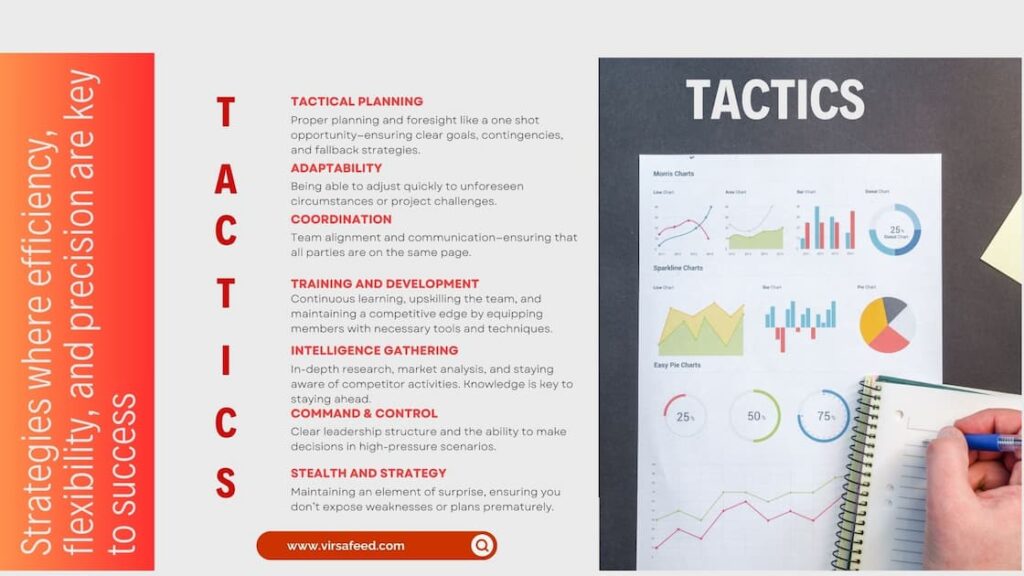
T – Tactical Planning
Proper planning and foresight like a one shot opportunity—ensuring clear goals, contingencies, and fallback strategies.
A – Adaptability
Being able to adjust quickly to unforeseen circumstances or project challenges.
C – Coordination
Team alignment and communication—ensuring that all parties are on the same page.
T – Training and Development
Continuous learning, upskilling the team, and maintaining a competitive edge by equipping members with necessary tools and techniques.
I – Intelligence Gathering
In-depth research, market analysis, and staying aware of competitor activities. Knowledge is key to staying ahead.
C – Command & Control
Clear leadership structure and the ability to make decisions in high-pressure scenarios.
S – Stealth and Strategy
Maintaining an element of surprise, ensuring you don’t expose weaknesses or plans prematurely.
Framework 2:
COMMAND
This is another framework that mirrors military-style leadership and decision-making, helping leaders in project management stay resolute and structured.
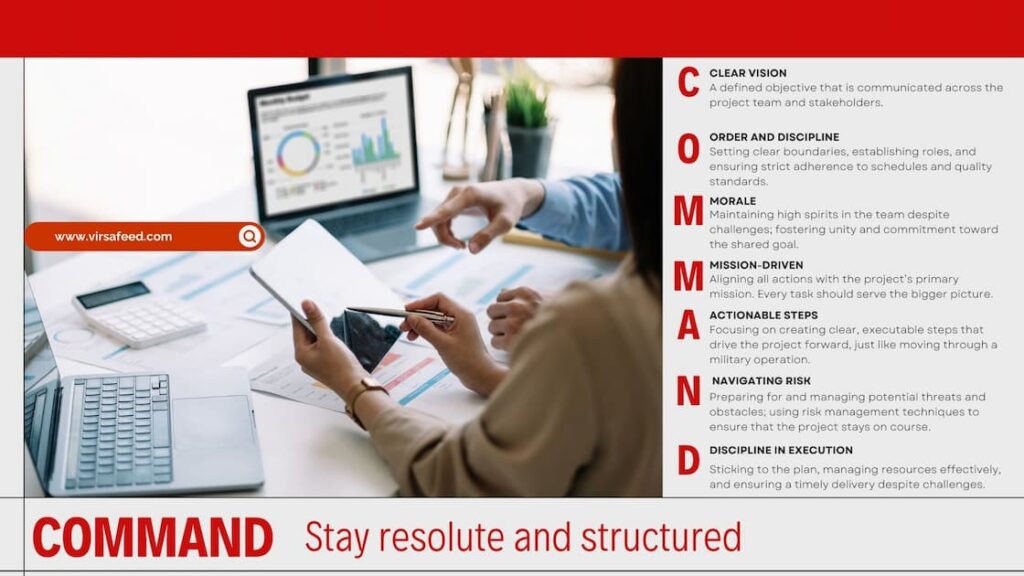
C – Clear Vision
A defined objective that is communicated across the project team and stakeholders.
O – Order and Discipline
Setting clear boundaries, establishing roles, and ensuring strict adherence to schedules and quality standards.
M – Morale
Maintaining high spirits in the team despite challenges; fostering unity and commitment toward the shared goal.
M – Mission-Driven
Aligning all actions with the project’s primary mission. Every task should serve the bigger picture.
A – Actionable Steps
Focusing on creating clear, executable steps that drive the project forward, just like moving through a military operation.
N – Navigating Risk
Preparing for and managing potential threats and obstacles; using risk management techniques to ensure that the project stays on course.
D – Discipline in Execution
Sticking to the plan, managing resources effectively, and ensuring a timely delivery despite challenges.
Framework 3:
BATTLE
Drawing inspiration from military engagements, the BATTLE framework can help project managers stay focused and resilient through any project’s lifecycle.
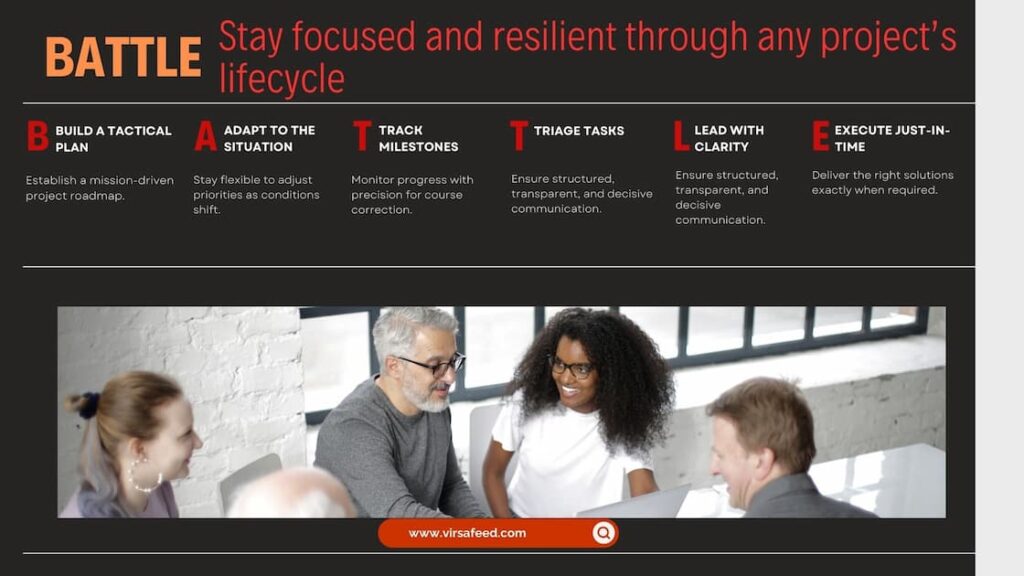
B –Build a Tactical Plan
Establish a mission-driven project roadmap.
A –Adapt to the Situation
Stay flexible to adjust priorities as conditions shift.
T –Track Milestones
Monitor progress with precision for course correction.
T –Triage Tasks
Quickly assess and allocate resources where they are most needed.
L –Lead with Clarity
Ensure structured, transparent, and decisive communication.
E –Execute Just-in-Time
Deliver the right solutions exactly when required.
Framework 4:
RESOLVE
Inspired by the relentless drive that military personnel display, the RESOLVE framework instills a sense of purpose and tenacity in project management.
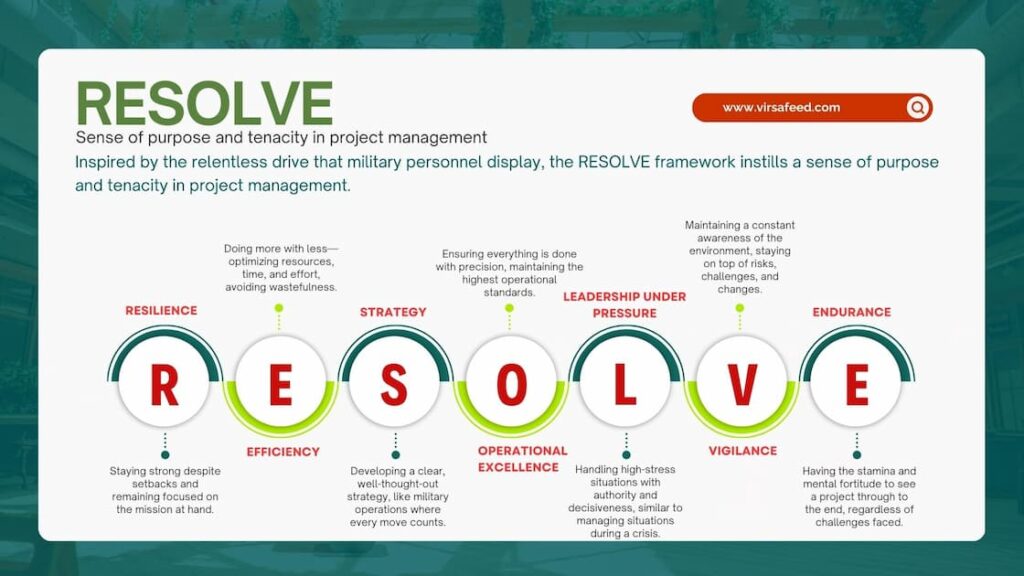
R – Resilience
Staying strong despite setbacks and remaining focused on the mission at hand.
E – Efficiency
Doing more with less—optimizing resources, time, and effort, avoiding wastefulness.
S – Strategy
Developing a clear, well-thought-out strategy, like military operations where every move counts.
O – Operational Excellence
Ensuring everything is done with precision, maintaining the highest operational standards.
L – Leadership Under Pressure
Handling high-stress situations with authority and decisiveness, similar to managing situations during a crisis.
V – Vigilance
Maintaining a constant awareness of the environment, staying on top of risks, challenges, and changes.
E – Endurance
Having the stamina and mental fortitude to see a project through to the end, regardless of challenges faced.
Framework 5:
FORCE
Discipline in Project Execution
(Focus, Organize, Rally, Communicate, Execute)
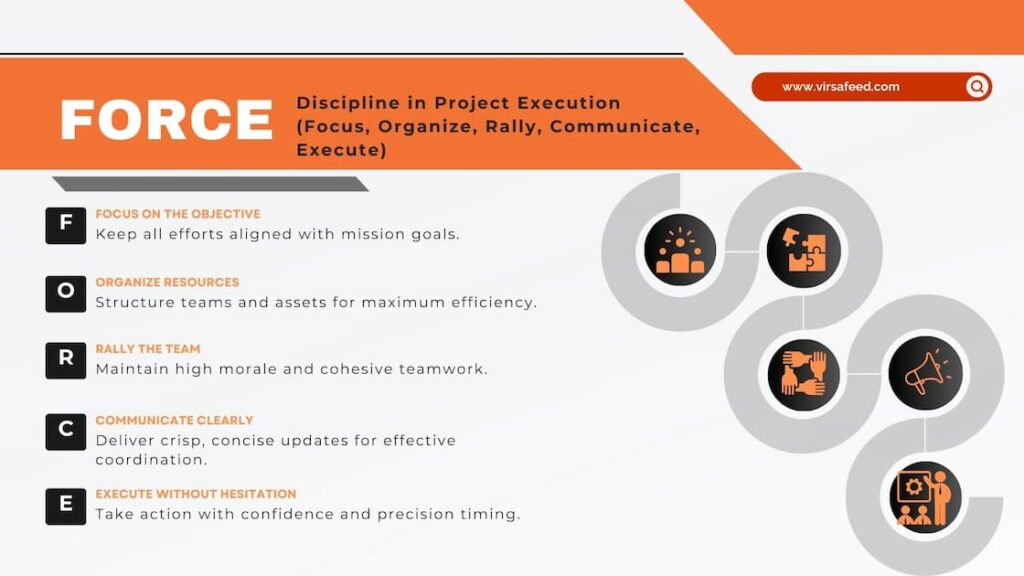
F –Focus on the Objective
Keep all efforts aligned with mission goals.
O–Organize Resources
Structure teams and assets for maximum efficiency.
R –Rally the Team
Maintain high morale and cohesive teamwork.
C –Communicate Clearly
Deliver crisp, concise updates for effective coordination.
E –Execute Without Hesitation
Take action with confidence and precision timing.
Framework 6:
STRIKE
Tactical Execution for Project Success
(Secure, Track, React, Integrate, Keep Pace, Execute)
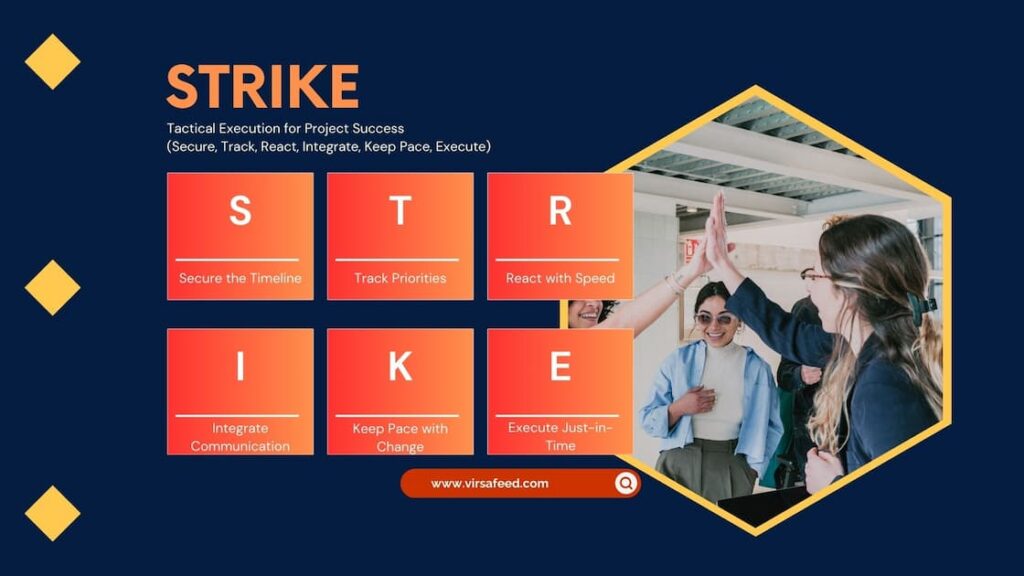
S –Secure the Timeline
Lock in schedules and defend deadlines with precision.
T –Track Priorities
Continuously monitor and adjust based on mission-critical needs.
R –React with Speed
Make quick, informed decisions under pressure.
I –Integrate Communication
Ensure seamless and structured team coordination.
K –Keep Pace with Change
Adapt swiftly to dynamic project demands.
E –Execute Just-in-Time
Deliver efficiently without overcommitting resources.
Framework 7:
SWORD
Cutting Through Project Complexity
(Strategy, Workflow, Optimization, Response, Delivery)
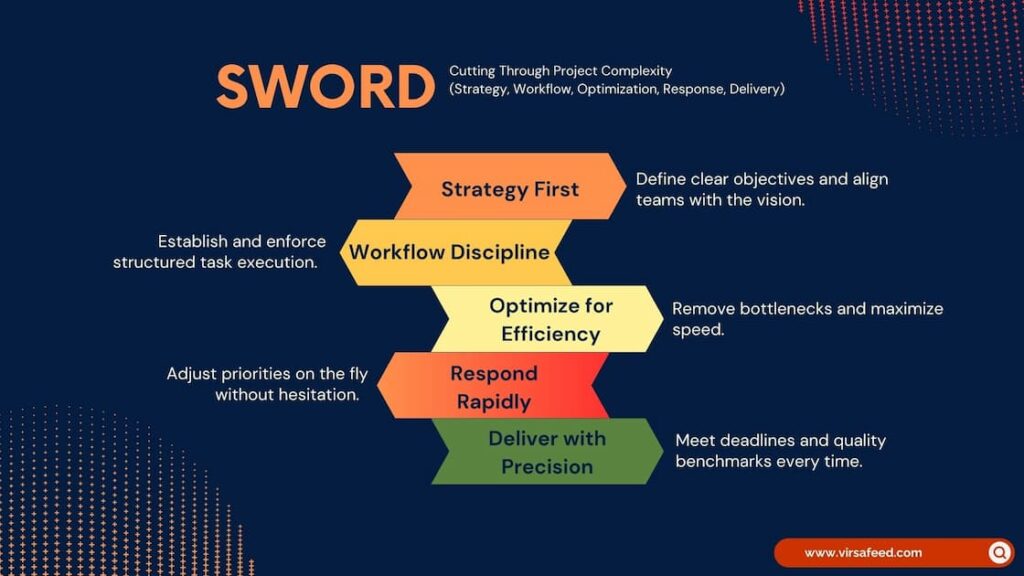
S –Strategy First
Define clear objectives and align teams with the vision.
W –Workflow Discipline
Establish and enforce structured task execution.
O –Optimize for Efficiency
Remove bottlenecks and maximize speed.
R –Respond Rapidly
Adjust priorities on the fly without hesitation.
D –Deliver with Precision
Meet deadlines and quality benchmarks every time.
Framework 8:
ARMOR
Resilient Project Management Framework
(Assess, Rank, Mobilize, Overcome, Report)
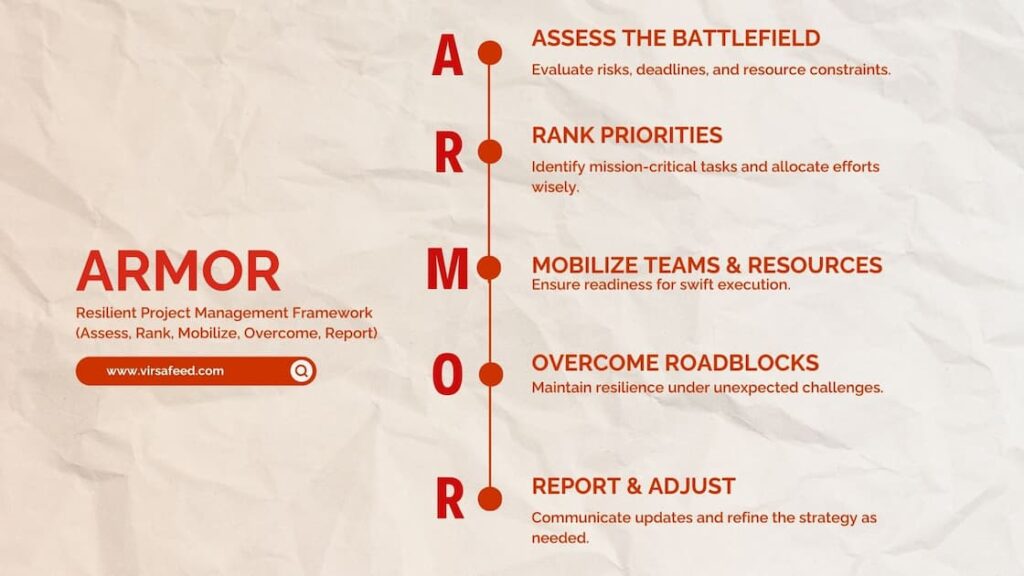
A–Assess the Battlefield
Evaluate risks, deadlines, and resource constraints.
R–Rank Priorities
Identify mission-critical tasks and allocate efforts wisely.
M–Mobilize Teams & Resources
Ensure readiness for swift execution.
O–Overcome Roadblocks
Maintain resilience under unexpected challenges.
R–Report & Adjust
Communicate updates and refine the strategy as needed.
Know the Author
Hey there, readers! Welcome to my little corner of the internet. I ain’t just your average blogger — I’m a seasoned project manager with a knack for diving deep into research and unraveling the mysteries of project management. But that’s not all there is to me! With a background in Healthcare, IT and Pharmaceuticals for Project management, hospital management and a passion for travel, hiking, and trekking, I’m all about blending the professional with the adventurous. So, join me on this voyage where we’ll explore the ins and outs of strategy, project management and share tales from the management, travels, and maybe even swap tips along the way.
Feel free to visit my site to know more about my researched output in the form of blogs: http://www.virsafeed.com/
Would you like to connect with me? Please drop me an email at virsafeed.com@gmail.com