

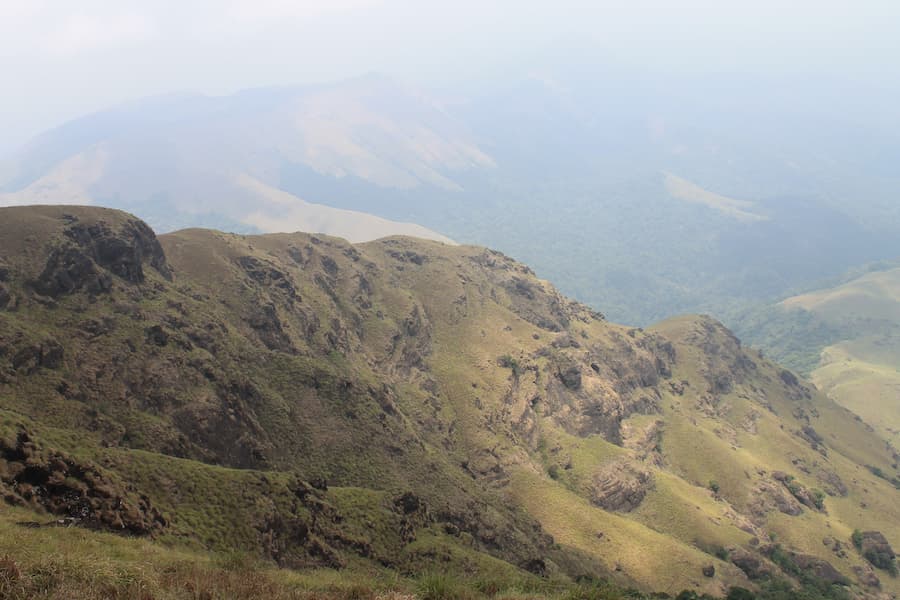
No Food, No Water, and a Group That Trusted Me
“The rain did not stop for two days. Neither did the thought that kept circling my head: they followed me in here.”
The monsoon in Coorg does not fall. It arrives, like something with intent, and it does not leave. By the second hour of that first afternoon the rain had stopped being weather and become the entire world, a grey roar coming down through the canopy so hard that speaking meant shouting into someone’s ear. We were soaked past the point where being soaked mattered. We were laughing about it.
We stopped laughing when I realised I could not find the trail.
How It Started
It was supposed to be a straightforward monsoon trek through the green hills of Coorg, the kind of route I had walked variations of many times. There were a handful of us. They were less experienced than me, which is why they had come along, and which is the detail that would sit on my chest for the next forty-eight hours.
We started well. The forest in full monsoon is one of the most beautiful places on earth, everything dripping and luminous and impossibly alive, streams running where no stream had been a week earlier. That beauty is also the danger, though I would not have put it that way at the time. Water changes a landscape. Paths become watercourses. Familiar ground stops looking familiar.
The fog came in through the afternoon, thickening until the world shrank to maybe fifteen metres in any direction. Somewhere in that white, on ground that had turned to running mud, we walked off the trail. There was no dramatic moment. That is the thing about getting lost. It does not announce itself. You simply keep walking, confident, and then at some point you look around and the confidence is gone and you cannot say exactly when it left.
The Moment You Know
I remember stopping. I remember scanning for anything, a cairn, a cut branch, the shape of a ridge, and finding only fog and green and the sound of water. I remember my stomach dropping.
And then I remember the second realisation, which was worse: four faces turned toward me, waiting. Wet, cheerful, entirely unworried, because I was the one who knew what he was doing. They did not know yet. In that gap of maybe ten seconds, before I said anything, I understood exactly what I had done. I had brought people who trusted me into a place I could no longer find my way out of.
There is a decision that gets made in that moment, and it is not about navigation. It is about what your face does. I made myself breathe. I made myself stand still. Then I told them, plainly, that we had lost the trail, that we were going to stop and think rather than wander, and that we were going to be fine. Two of those three statements were true. I said the third one anyway, and I said it steadily, because a leader’s panic spreads faster than any weather.
The First Night
We had almost nothing. That is the part I am least proud of and the part I will not dress up. This was meant to be a day walk. We had a little water, some snacks that were mostly gone, no shelter worth the name, and no way to call anyone from where we were.
The light went early under that cloud, and the temperature dropped with it. Wet clothes, wind, no fire in a forest where nothing would burn. We found a rock overhang that kept perhaps a third of the rain off, and we sat pressed together for the warmth, and we waited.
Nobody sleeps in those conditions. You drift and jerk awake, drift and jerk awake, and the night stretches out into something without dimension. I spent most of it doing arithmetic in my head. How long people last. What the weather would do. Which direction the road probably lay. Whether I had been right to stop moving, over and over, worrying at the decision like a loose tooth. And under all of it, the drumbeat: they followed me in here.
Day Two: The Rain That Was Trying to Kill Us Kept Us Alive
Morning did not so much break as lighten slightly. The rain had not eased at all. And here is the strange arithmetic of a monsoon survival situation, the thing that makes it different from being lost in dry country: the same downpour that had cost us the trail, soaked us to the bone, and stolen our body heat was also the reason we were not in serious trouble from thirst.
Water was the one thing we had in absurd abundance. It ran off every leaf and down every rock face. We drank from running water, choosing the fastest-moving flow we could find rather than anything pooled or still, and we drank often. That was the one decision I made in those two days that I would make again without hesitation. Dehydration is what kills you fast, and in a Coorg monsoon it is the one problem the mountain solves for you.
Hunger was different. Hunger arrived on the second morning as a genuine, hollow presence, and with it came the specific mental fog that makes bad decisions easy. This is where I made the choice I am least comfortable writing about.
We ate leaves. I want to be exact about this, because it would be easy to tell it as resourcefulness and it was not. I picked green growth I believed I recognised, in a forest full of plants I could not name, and we chewed it for the feeling of something in the stomach. It did us no harm. That was luck, not skill. The Western Ghats are full of things that will make you violently ill or worse, and a group already hypothermic and lost is a group that cannot afford vomiting and cramps.
If you take one thing from this account, let it be that: I got away with something I should not have done. The hunger was survivable. The gamble almost was not.
The Walk Out
By late morning on the second day I made the call to move. We had been static long enough that staying was its own risk, the cold was winning, and I had a direction I trusted more than the others, drawn from the one reliable thing in that whole landscape: water runs downhill, and downhill in the Ghats eventually finds a stream, and streams eventually find people.
So we followed water. Not into it, because a monsoon stream in spate will take your legs out from under you and is the single fastest way to turn a bad day into a fatal one, but alongside it, on the ground beside the flow, contouring down.
It was slow. Everything was slick. We fell, all of us, repeatedly. Leeches had found us hours earlier and we had long since stopped caring about them. The group had gone very quiet by then, that particular silence of people running on reserves, and I kept up a stream of talk, checking on each of them by name, making them answer, making them stay present. Half of that was for them. Half of it was to keep my own head from going somewhere unhelpful.
I do not know how many hours. Time had stopped being a useful category.
The Sound That Was Not Water
It was one of the others who heard it first. A voice, and then a second one, somewhere below and to the right, and then, impossibly, the shape of a cleared slope through the trees. Cultivated ground. A plantation edge.
I remember the sound the group made. Not a cheer. Something rawer and more broken than that, the noise people make when a thing they had been carefully not thinking about turns out not to be true after all.
There were people. They took one look at five soaked, filthy, shaking figures coming out of the treeline and did what people in the hills always do, which is feed you before they ask you anything. Hot food. Dry ground. Somebody’s shed. I have eaten in some fine places in my life and I have never tasted anything like that meal.
I got all four of them out. Cold, hungry, leech-bitten, shaken, but out and whole. That is the only statistic from those two days that has ever mattered to me.
What Stayed
I have been back to Coorg many times since. It remains one of the most beautiful trekking landscapes in India and I would recommend it to anyone. The hills did nothing wrong. I did.
A few things from those two days have never left me, and I offer them not as a lesson but simply as what I carry now:
- Fog is the real hazard, not rain. Rain is uncomfortable. Fog removes your ability to navigate, and in the Ghats it can drop in minutes.
- Stopping was right. Everything I did wrong happened before we got lost. The one thing I did right was refusing to wander in white-out, and I would do it again.
- Running water saved us. In a monsoon, thirst is the one problem the mountain hands you an answer to. Take it, and take it from moving water.
- The leaves were luck. I have never repeated that and I never will. Hunger is slow. Poisoning is not.
- A day walk deserves a night’s respect. Everything we lacked, we lacked because we had labelled the day in advance. The mountain does not read your label.
People sometimes ask whether it put me off. It did the opposite. Something happens when you find out what you are actually made of at two in the morning, soaked through, with four people depending on you and no good options on the table. You do not come down from that the same person who walked up.
The rain in Coorg still sounds like that to me. Forty-eight hours of roar, and then voices through the trees.
“I got all four of them out. That is the only statistic from those two days that has ever mattered to me.”
Hey there, readers! Welcome to my little corner of the internet. I ain’t just your average blogger — I’m a seasoned project manager with a knack for diving deep into research and unraveling the mysteries of project management. But that’s not all there is to me! With a background in Healthcare, IT and Pharmaceuticals for Project management, hospital management and a passion for travel, hiking, and trekking, I’m all about blending the professional with the adventurous. So, join me on this voyage where we’ll explore the ins and outs of strategy, project management and share tales from the management, travels, and maybe even swap tips along the way.
Feel free to visit my site to know more about my researched output in the form of blogs: http://www.virsafeed.com/
Would you like to connect with me? Please drop me an email at virsafeed.com@gmail.com