

Serve the mission, not the metric.
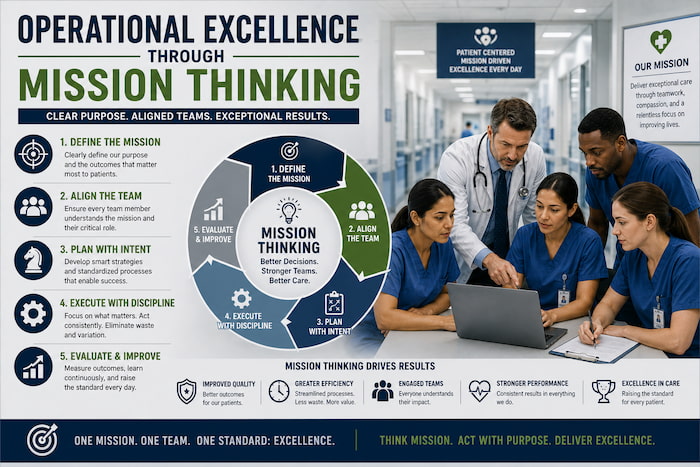
Most operational improvement in healthcare fails for the same reason. It optimises parts while losing sight of the whole. A department hits its target, a metric turns green, a process is streamlined, and yet the patient’s actual experience does not improve, because each piece was optimised in isolation from the purpose it was meant to serve. Mission thinking is the corrective. It starts from the outcome that actually matters and works backward, refusing to let any local efficiency win at the expense of the real objective.
Everything Serves the Mission
In a military operation, every action is judged against one question: does this serve the mission. A perfectly executed manoeuvre that does not advance the objective is not success. It is wasted motion, however impressive in isolation. Healthcare is full of impressive wasted motion, processes followed faithfully, metrics chased diligently, all of it disconnected from whether the patient got better care, sooner. Mission thinking forces the discipline of constantly asking what the actual purpose is, and whether this activity genuinely advances it or merely keeps people busy in a way that looks like progress.
Define the Mission Before the Metrics
The common error is to start with metrics and never name the mission they are supposed to represent. So people optimise the metric and the mission quietly disappears. If the mission of an emergency department is to assess, stabilise, and route patients safely and swiftly, then the four-hour target is a proxy for that and nothing more. The moment people start gaming the clock at the expense of the actual purpose, moving a patient to dodge the timer rather than to help them, the metric has eaten the mission. Mission thinking keeps the purpose primary and treats every metric as a servant of it, never the reverse.
Align the Whole System to One Purpose
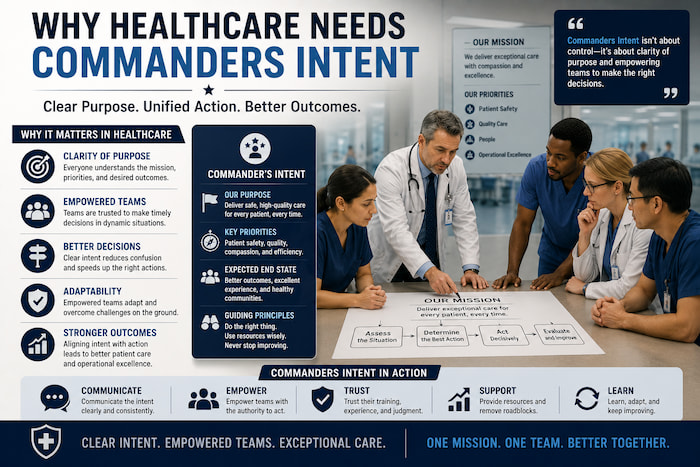
Operational excellence emerges when every part of a system understands the shared mission and aligns to it, rather than defending its own local target. The classic failure is the well-run silo: each department optimises its own numbers while the patient is handed between them like a parcel nobody owns end to end. Mission thinking dissolves the silo logic by giving everyone the same overriding objective. When the lab, the ward, the pharmacy, and the discharge team all genuinely understand they share one mission, the handoffs that usually fail start to hold, because nobody is optimising their corner at the whole’s expense.
Mission Thinking Empowers the Front Line
The deepest benefit is what it does for the people doing the work. When a team truly understands the mission, they can make good decisions without escalating every choice upward, because they know what they are trying to achieve and can judge for themselves what serves it. This is faster, more resilient, and far more motivating than following rules without understanding them. People who grasp the why adapt intelligently when the situation does not match the script, and the situation never quite matches the script. That adaptive, purpose-aligned front line is what operational excellence actually looks like in practice.
Hey there, readers! Welcome to my little corner of the internet. I ain’t just your average blogger — I’m a seasoned project manager with a knack for diving deep into research and unraveling the mysteries of project management. But that’s not all there is to me! With a background in Healthcare, IT and Pharmaceuticals for Project management, hospital management and a passion for travel, hiking, and trekking, I’m all about blending the professional with the adventurous. So, join me on this voyage where we’ll explore the ins and outs of strategy, project management and share tales from the management, travels, and maybe even swap tips along the way.
Feel free to visit my site to know more about my researched output in the form of blogs: http://www.virsafeed.com/
Would you like to connect with me? Please drop me an email at virsafeed.com@gmail.com