

Logistics is care, not overhead
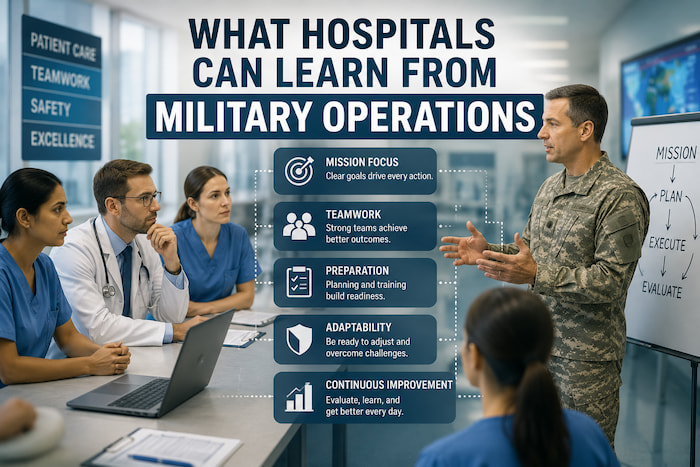
I have spent one decades inside hospital operations, and I have also lived close enough to military life to watch how soldiers prepare for the worst day of their lives long before it arrives. The longer I worked across both worlds, the harder it became to ignore a simple truth: a busy hospital and a field unit are solving the same problem. Both move scarce resources to the point of need, under time pressure, with lives in the balance, and with no room to improvise the basics. The difference is that the military rarely lets the basics drift, while hospitals often do.
Logistics Is Care, Not Overhead
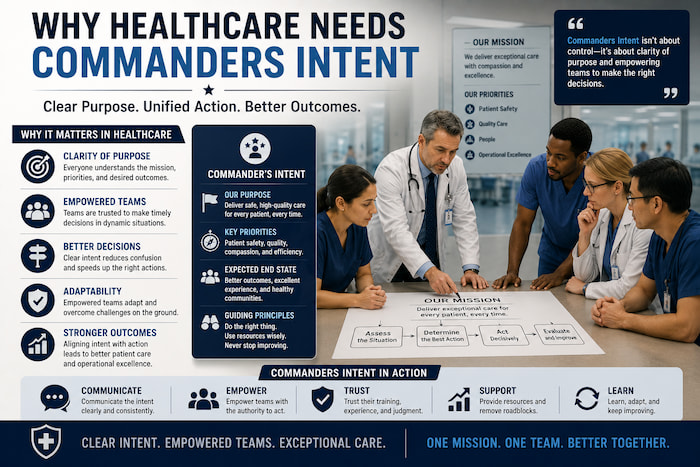
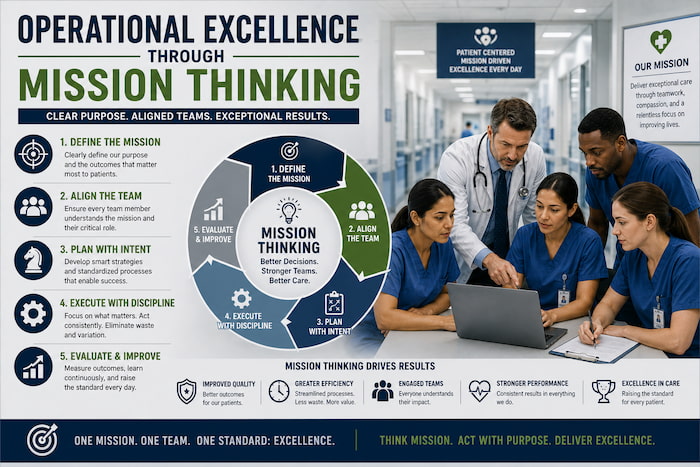
In a military operation, nobody treats supply as an afterthought. The forward unit that runs out of fuel, ammunition, or blood is combat ineffective no matter how brave the people are. Hospitals tend to think differently. We celebrate the surgeon and the bedside nurse, and we quietly tolerate the stockout, the missing instrument tray, the delayed porter. Yet a delayed tray is a delayed operation, and a delayed operation is a patient left waiting on a trolley. The military lesson is that logistics is clinical care wearing work clothes. When you fund it, staff it, and measure it with the same seriousness you give to the clinical front line, throughput and safety both improve.
Standard Operating Procedures Free People to Think
A common misreading of military discipline is that it turns people into robots. The opposite is true. Soldiers drill the routine actions until they are automatic precisely so that their judgment is available for the parts of the situation that genuinely require it. A hospital that has no agreed way to admit a deteriorating patient forces every nurse to reinvent the process at three in the morning, which is exactly when fatigue makes invention dangerous. Build the checklist, rehearse the handover, standardise the crash response, and you are not removing clinical thinking. You are protecting it for the moment it matters.
After-Action Reviews Without Blame
Perhaps the most transferable practice is the after-action review. The military debriefs nearly everything, not to assign shame but to extract the lesson while it is still fresh. Healthcare runs incident reviews too, but they often arrive months later, wrapped in defensiveness, and aimed at finding a name rather than a cause. If hospitals adopted the cadence and the candour of a genuine after-action review, where the question is always what happened and what we change rather than who is at fault, the same near-miss would stop recurring on three different wards.
The Honest Caveat
None of this means a hospital should become a barracks. Care is relational in a way that combat operations are not, and warmth at the bedside is not a process to be optimised away. The borrowing has to be selective. Take the discipline around logistics, standardisation, and learning. Leave behind the rigid hierarchy that punishes the junior nurse for raising a concern. The hospitals that get this balance right run with military precision where precision saves lives, and stay deeply human everywhere else.
Hey there, readers! Welcome to my little corner of the internet. I ain’t just your average blogger — I’m a seasoned project manager with a knack for diving deep into research and unraveling the mysteries of project management. But that’s not all there is to me! With a background in Healthcare, IT and Pharmaceuticals for Project management, hospital management and a passion for travel, hiking, and trekking, I’m all about blending the professional with the adventurous. So, join me on this voyage where we’ll explore the ins and outs of strategy, project management and share tales from the management, travels, and maybe even swap tips along the way.
Feel free to visit my site to know more about my researched output in the form of blogs: http://www.virsafeed.com/
Would you like to connect with me? Please drop me an email at virsafeed.com@gmail.com